Your Best Salesperson Never Sleeps: How AI Finds Your Next Customer
Finding buyers used to be a numbers game: buy a list, call everyone, hope. AI changes the question from "who is on the list" to "who is showing signs of buying right now." A plain-language guide for leaders to the four jobs AI does in lead generation, where companies get it wrong, and a five-step playbook.

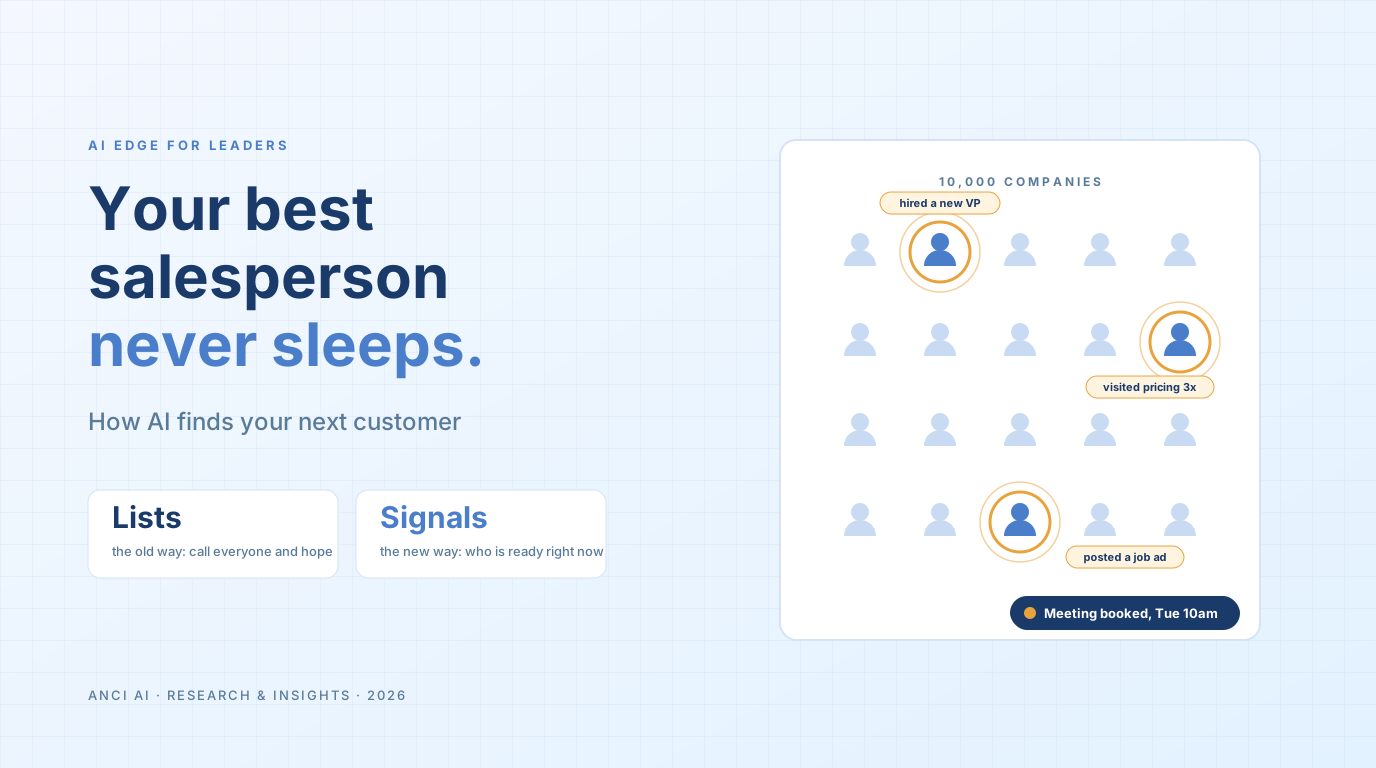
Somewhere out there is a person who needs what you sell. They have the money. They have the problem. They are ready to buy. The hard part is finding them before your competitor does. For fifty years, finding buyers meant cold calls, trade shows, and long lists of names bought from a broker. Most of that work was guessing. You called a thousand people and hoped a few would say yes. AI is now changing the guessing part. It reads the small clues buyers leave behind, sorts the list, writes the first note, and tells your team who to call this morning. This article explains how that works in plain words, where companies get it wrong, and what leaders should do next.
01 / What Is Changing
From buying lists to reading signals
The old way of finding customers was a numbers game. You bought a list of ten thousand names. Your team called all of them. One in a hundred picked up the phone. One in a thousand said yes. If you wanted more sales, you made more calls.
The new way starts with a simple idea. Buyers leave footprints before they buy.
Think about what happens inside a company right before it spends money on something new. It hires a new head of sales. It posts job ads for people who know a certain tool. Its CFO shares a post about cutting costs. Someone from its office visits your pricing page three times in one week. Each of these is a small clue. Alone, a clue means little. Together, the clues tell a story: this company is getting ready to buy.
People in sales call these clues intent signals. The word intent just means what someone plans to do. A signal is a hint about that plan.
Here is the problem. A human can track a handful of clues about a handful of companies. Nobody can watch thousands of clues across thousands of companies every day. AI can. It reads the job boards, the news, the website visits, and your own customer records, all at once, and it never gets tired.
Think of it like a weather forecast. One cloud tells you nothing. A million readings from a million places tell you it will rain at three o’clock. AI turns scattered clues into a forecast of who is about to buy.
The old question was, “Who is on the list?” The new question is, “Who is showing signs of buying right now?”
So the real change is not that AI makes more calls or sends more emails. The real change is a new question. That one shift, from the list to the signal, is behind almost everything else in this article.
02 / The Four Jobs
What AI actually does in lead generation
Vendors use a lot of big words here. Strip them away and AI does four jobs in finding customers. Each one used to be done by a person, slowly.
Put the four jobs together and you get a machine that watches for clues, picks the best people, writes the first note, and books the meeting. Your humans step in at the moment that matters most: the actual conversation.
03 / Lessons From the Field
Where companies get it wrong
The most common mistake is also the most tempting one. A company buys an AI writing tool and uses it to send ten times more emails. The math seems simple. More emails, more replies. But that is not what happens.
What happens is ten times more noise. Buyers get the same robot-sounding note from five vendors in one week. They stop opening anything. Worse, the big email providers notice. In 2024, Google and Yahoo started blocking bulk senders who collect too many spam complaints. A company that uses AI as a megaphone can lose the ability to reach anyone at all, including its own customers.
AI used as a megaphone gets you tuned out. AI used as a listening device finds customers the old way never could.
Here is a simple picture of the pattern that works instead. Imagine two sales teams with the same product. The first team sends twenty thousand AI-written emails a month. The second team uses AI to pick two thousand companies that are showing buying signals right now, and sends each one a note that mentions something true about them. The second team sends a tenth of the email and books more meetings. It is not magic. It is just better aim.
Three more lessons show up again and again.
- Messy data makes a confident mess. If your customer records have old job titles, dead email addresses, and three spellings of the same company, the AI will learn from garbage. It will sound sure of itself while it is wrong. Clean the records first. It is boring work and it is the work that matters most.
- The AI learns from what you call a win. If you tell it “a win is any deal that closed,” it will chase deals that close fast and leave fast. Tell it “a win is a customer who stayed two years.” Now it learns to find customers who last.
- Do not be creepy. Using public clues is fine. Mentioning that you know what someone searched for last night is not. Privacy rules in Europe and the United States say the same thing in different words: you need a good reason to contact someone, and they need an easy way to say stop. Follow that, and your emails get read instead of reported.
04 / The Playbook
Five steps for leaders
You do not need to understand the technology to run this well. You need to make five decisions, in this order.
- Pick one lane. Do not turn on AI for every product in every market. Choose one product and one kind of customer. Learn there. Expand when it works.
- Clean the data before you buy the tool. Give someone six weeks to fix the customer records. If the vendor says you can skip this step, be suspicious.
- Write down what a good lead is. One page. What size of company, what role, what problem, what makes them stay. This page is what the AI learns from. If it is fuzzy, the AI will be fuzzy.
- Keep a human on the send button. At the start, every AI-written note gets a thirty-second human read. You will catch the bad ones, and you will learn what the tool is good at. Loosen the rule later, on purpose, not by accident.
- Change the scoreboard. Stop counting emails sent and calls made. Start counting meetings booked and deals closed from AI-found leads. If the new numbers do not move in ninety days, something is wrong with steps two or three.
When a vendor comes to pitch, ask three plain questions. Where do your signals come from? What happens when the AI is wrong? Can my team see why a lead got a high score? A good vendor answers all three without slides. A weak one changes the subject.
05 / What Comes Next
When the agent runs the whole front door
Today, most companies use AI for one or two of the four jobs. The next step is already visible. AI agents will run the whole loop: spot the signal, write the note, handle the reply, book the meeting, and update the records, with a human checking in rather than doing each step.
That changes what a sales team is. Fewer people will spend their day dialing. More people will spend their day in real conversations with buyers who are already interested. The job moves from hunter to advisor. Leaders should plan for that now. It means different hiring, different training, and a different idea of what a great salesperson looks like.
There is a twist coming, too. Buyers are getting AI of their own. Soon an executive’s inbox will have an assistant that reads every sales email first and throws most of them away. If your AI writes a note and their AI deletes it, nobody buys. The only thing that gets through that filter is a message with something real in it: a true problem, a clear number, a reason to talk this week.
That is good news for leaders who do this right. The arms race does not reward the loudest company. It rewards the one that knows the most about who it is talking to.
06 / Conclusion
Aim, not volume
Lead generation is moving from volume to signals. AI’s real gift is not more emails. It is knowing who to talk to, and when. Leaders who treat it as a megaphone will get tuned out, by buyers and by spam filters. Leaders who treat it as a listening device will find customers that the old numbers game never could.
Start with one product. Clean the data. Write down what a good customer looks like. Keep a person on the send button. Measure meetings, not messages. Do those five things and your best salesperson will still be a human. They will just never have to guess who to call again.
Get AI scheduling insights, product news, and Bay Area community updates delivered to your inbox.
No spam. Unsubscribe anytime.