The Robot Can Write the Ad. You Still Pick the Story.
A plain-English guide to AI in marketing for executives and VPs. The five jobs AI does well today, the three traps that catch smart teams, a one-page rule sheet, and a 30-day plan you can start Monday.

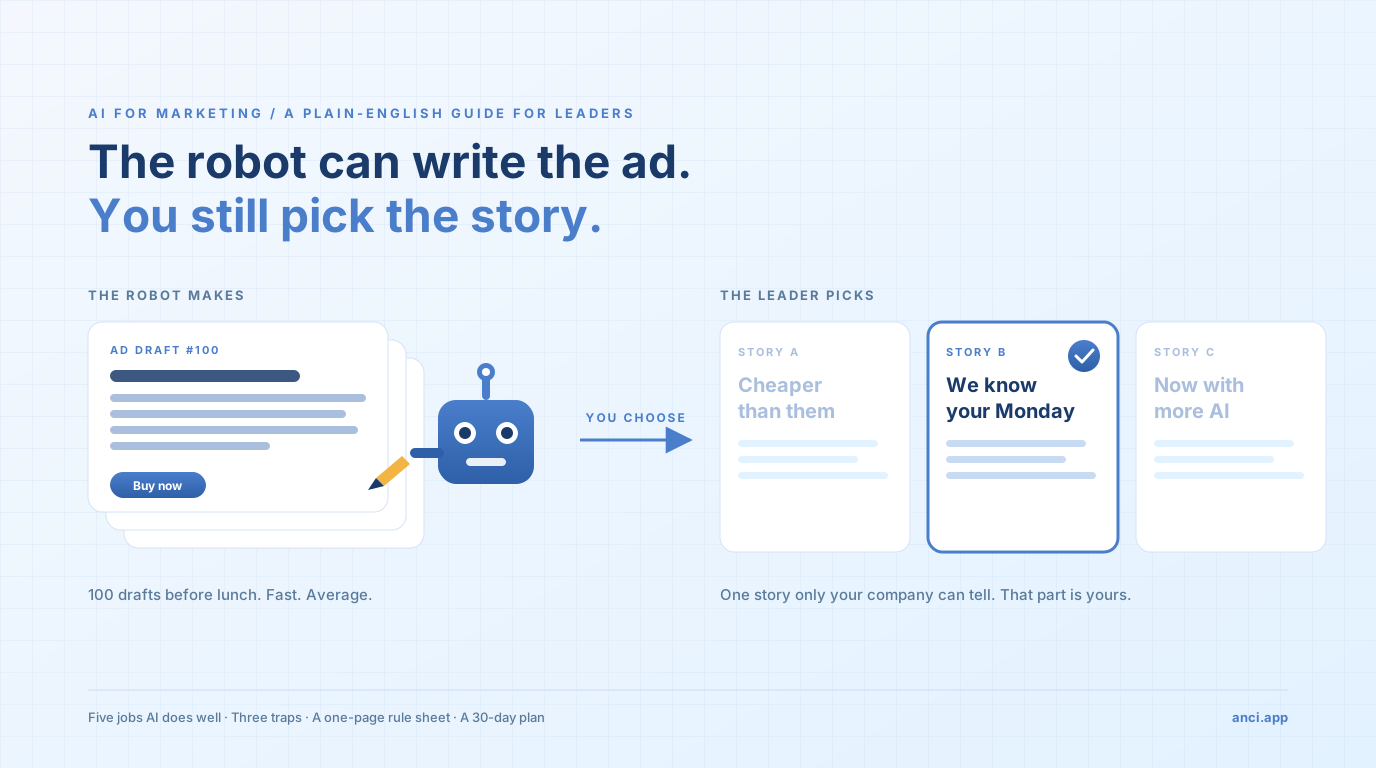
Imagine you hired a new marketing helper. This helper reads every email your customers ever sent. It writes a hundred versions of an ad before lunch. It never gets tired, never asks for a raise, and works at 3 a.m. That helper is here. It is called AI, and your competitors are already using it.
Here is the catch. The helper is fast, but it does not know your customers, your brand, or your story. It only knows what it has read. So the question for leaders is not “Should we use AI in marketing?” That ship has sailed. The real question is “What do we let the robot do, and what do we keep for ourselves?” This article answers that in plain words.
01 / The Shift
The robot went from toy to teammate
Three years ago, AI in marketing was a party trick. You typed “write me a slogan” and got something cute. Then you went back to real work.
That is over. Today the AI tools can read, write, draw, listen, and talk. They can look at a spreadsheet of ten thousand customers and tell you which ones are about to leave. They can take one blog post and turn it into a video script, five social posts, and an email, all in the voice of your brand. They can answer a customer at midnight and sound like your best salesperson.
Think of it like this. Your marketing team used to have two kinds of workers. Thinkers, who decide the story. And makers, who turn the story into ads, emails, and pages. The makers always had more work than hours. AI is a new maker that works at the speed of light.
The biggest change is not any single trick. It is that the cost of making marketing stuff just dropped to almost zero. When something becomes nearly free, people make a lot more of it. Expect ten times more ads, emails, and posts in the world next year. Most of them will be average. Yours do not have to be.
One more shift that leaders miss. The new AI tools do not just make things. They can act. An AI agent can watch your ad spend, notice one campaign is wasting money, pause it, and tell you why. That is not a helper handing you a draft. That is a helper doing the job. We will come back to why that needs rules.
AI did not make marketing easier. It made making easier. Thinking just got more important, not less.
02 / The Five Jobs
Five jobs AI does well today
You do not need to understand how AI works to use it well. You need to know which jobs to hand it. Here are the five that pay off right now, in plain words.
Job 1: Writing the first draft. Emails, ad copy, landing pages, product descriptions, social posts. AI writes a decent first version in seconds. A human then makes it good. The team that used to ship one email a week can now test five. The rule: AI writes, a person edits, nothing goes out unread.
Job 2: Knowing your customers better than you do. AI can read every support ticket, review, survey, and sales call, then tell you what people really complain about and really love. Picture a retail team that feeds two years of reviews into an AI tool and finds that the number one complaint is not price. It is the box the product comes in. Nobody noticed, because nobody could read ten thousand reviews. The fix costs almost nothing.
Job 3: Sending the right message to the right person. Old marketing sent one email to everyone. AI can write a slightly different email for each kind of customer. The new buyer gets a welcome. The quiet customer gets a nudge. The loyal fan gets a thank-you. This used to need a team of twenty. Now it needs one person and a good tool.
Job 4: Spending ad money smarter. AI watches your ads all day. It sees which one is working and moves money toward it, like a trader watching stocks. Humans check in once a day instead of staring at dashboards. The money goes further, and the people get their time back.
Job 5: Answering customers around the clock. Chat agents on your website or in your app can answer common questions, book a demo, or hand a hot lead to a human. The good ones know when to stop and get a person. The bad ones make customers angry. The difference is in how you set them up, which we cover in the traps section.
Notice what is not on this list. Choosing your brand’s story. Deciding which customers matter most. Deciding what you will never say. Those are still your job. The robot can write the ad. You still pick the story.
03 / Why It Matters
The bottleneck just moved
Every business has a slowest part. In marketing, the slowest part used to be making things. Writing took days. Design took weeks. A campaign took a quarter. Leaders spent their time asking “When will it be ready?”
AI removes that bottleneck. Now the slowest part is something else: deciding what to make, and knowing if it worked. That is a leadership job, not a tool job. Here is what that means for you in practice.
Speed is no longer your edge. When everyone can make a campaign in an hour, being fast is just table stakes. Your edge becomes taste, judgment, and knowing your customer. Those are harder to copy than a tool.
Small teams can act big. A five-person marketing team with good AI tools can now do what a fifty-person team did in 2022. That is great news if you are the five. It is a warning if you are the fifty, because a smaller rival can match you on output and beat you on focus.
Your people’s jobs are changing, not vanishing. The writer becomes an editor. The analyst becomes a question-asker. The campaign manager becomes a pilot watching the instruments. Leaders who tell their teams “AI is coming for your job” get fear. Leaders who say “AI is your new assistant, let’s learn it together” get speed.
The money question changes. You used to budget for people and ad spend. Now you also budget for tools, training, and the time to clean up your data. The teams that get the most from AI are not the ones with the fanciest tools. They are the ones whose customer data is clean and in one place. Garbage in, garbage out, only faster.
04 / The Traps
Three traps that catch smart teams
Most AI marketing failures are not about the technology. They come from handing the robot a job with no rules. Here are the three traps we see most often, and the simple fix for each.
Trap 1: Sounding like everyone else. AI learned to write by reading the whole internet. So when you ask it for an ad, you get the average of every ad ever written. It is fine. It is also forgettable. If your whole team ships AI drafts without editing, your brand slowly starts to sound like every other brand. The fix is simple. Give the tool your ten best pieces of writing and tell it “sound like this.” Then have a person add the one line only your company would say.
Trap 2: Making things up. AI sometimes states things that are not true, and it says them with total confidence. A made-up statistic in a sales email is embarrassing. A made-up refund policy in a chatbot is a lawsuit. In 2024, an airline’s chatbot promised a customer a discount that did not exist. A court made the airline pay it anyway. The fix: every number, claim, and promise gets checked by a human before it reaches a customer. No exceptions.
Trap 3: Losing trust. Customers do not mind that AI helped write the email. They mind being tricked. They mind a bot pretending to be a person. And they really mind finding out their private data was pasted into a tool nobody vetted. The fix is a one-page rule sheet. What can AI do on its own? What needs a human to approve? What must it never do? Write it down, share it, and update it every quarter.
05 / The Plan
A 30-day plan you can start Monday
You do not need a big program, a consultant, or a new department. You need one small win that you can show the board. Here is a plan that fits in one month.
Week 1: Pick one job. Go back to the five jobs above and pick one. Not three. One. First drafts are the easiest place to start because the risk is low and the time saved is obvious. Pick a team of two or three people who are curious, not scared. Give them one good tool and a budget the size of a team lunch.
Week 2: Write the rules. Use the one-page rule sheet. Decide who checks the robot’s work and what “good” looks like. Pick one number you will measure. Time saved per email. Response rate. Cost per lead. Just one.
Week 3: Run it side by side. Do the job the old way and the new way at the same time. Send both. Watch the number. Ask the team what felt faster, what felt wrong, and what they would never trust the tool with.
Week 4: Decide. Keep it, fix it, or drop it. Then tell the whole company what you learned in plain words. Even a failure is a win here, because now you know something your competitor does not. Then pick the next job and do it again.
Three questions to ask your marketing lead this week:
- Where does our team spend the most hours making things instead of deciding things?
- If an AI wrote a wrong number to a customer tomorrow, who would catch it, and how?
- What do we know about our customers that no AI could learn from the internet?
If the answers are vague, that is your starting point.
06 / The Takeaway
The robot can write the ad. You still pick the story.
AI just made the making part of marketing nearly free. That is a big deal, but it is not the whole deal. When everyone can make a hundred ads an hour, the ads stop being the hard part. The hard part becomes knowing what to say, to whom, and why they should care. That has always been the job of a leader. It just got more important.
So use the robot. Let it draft, sort, test, and answer. Give it rules, check its work, and keep your people in the loop. But do not hand it the story. The story is the one thing your competitors cannot copy, and the one thing no machine can write for you.
Get AI scheduling insights, product news, and Bay Area community updates delivered to your inbox.
No spam. Unsubscribe anytime.