|
|
|
AI Edge for Leaders
The Agent Workforce
Your New Coworkers Are Agents
This month the agents stopped waiting for instructions and started showing up to work, in sales, in marketing, inside Teams, with real access to your systems. The executive question flips with them: not "what can an agent do?" but "who's managing it?"
|

|
|
One theme ran through almost everything worth reading this month: the AI agent has graduated from demo to direct report. It's prospecting your pipeline overnight, drafting the ad, living inside the tools your team already uses, and, increasingly, holding keys to systems that can move money or delete data. That changes the job at the top from evaluating capability to managing a workforce: a badge for each agent, the narrowest access it needs, a logged trail, and a human over anything that can't be undone.
Raj
|
|
|
Cover Story · The Org Chart
Your Agents Just Got Keys to the Building
The capability arrived before the oversight did. The fix is old-fashioned: treat every agent like a new employee.
Somewhere in your company this quarter, an agent got access to a CRM, a payments API, a shared drive, and nobody filed the paperwork. That's the real story of agentic AI in 2026: the power showed up before the supervision did. McKinsey pegs the prize at $2.6 to $4.4 trillion a year, which is exactly why agents are being handed real permissions fast. The move that separates the careful from the exposed is unglamorous and familiar: give every agent its own badge, the least access it needs, and a log of everything it touches.
|
"An agent that's wrong doesn't just say the wrong thing. It can move money, send a file, or approve a request."
|
|
Give each agent its own identity. Individual badges, minimal permissions, every action logged, the basics you'd give any new hire.
|
|
Build the inventory before you scale. You can't govern a workforce you haven't counted.
|
|
Keep a kill switch. Monitor agent-to-agent chatter, and make shutting one down a one-click move.
|
Read the governance brief →
|
|
|
Department 01 · The Sales Floor
Your Best Salesperson Never Sleeps
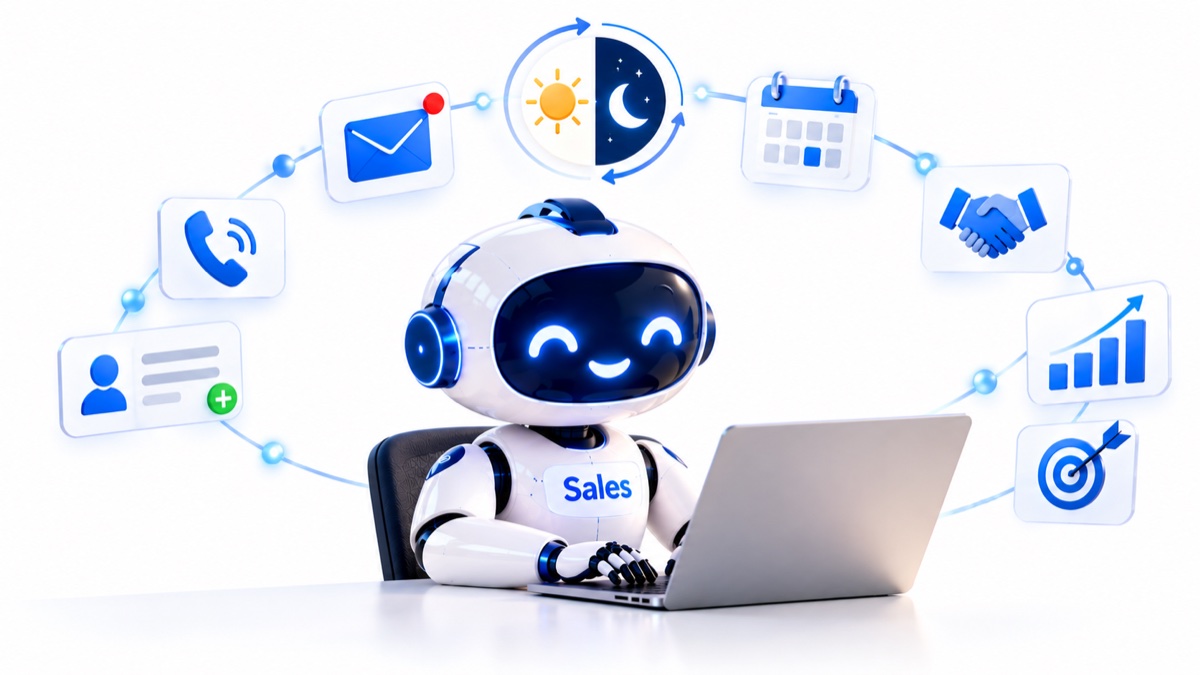
The old lead engine asked "who's on the list?" The agent asks a better question: "who's showing signs of buying right now?" It watches for intent, scores leads as the signal changes, drafts a personalized first touch, and works the overnight hours your team can't, so people spend their day only on prospects who are actually leaning in. The win isn't more outreach. It's less, aimed better.
|
Four jobs it does well. Find look-alike prospects, score leads dynamically, draft first contact, engage around the clock.
|
|
Precision beats volume. Quality outreach to fewer qualified leads outperforms AI-powered mass email.
|
|
Keep the human on the relationship. Let the agent do the watching and the warming; let people close.
|
"The old question was 'who's on the list?' The new one is 'who's showing signs of buying right now?'"
Read the GTM playbook →
|
|
|
Department 02 · The Marketing Desk
The Robot Can Write the Ad. You Still Pick the Story.
AI will happily draft the ad, mine the customer insight, personalize the message, and optimize the spend. What it won't do is decide what you stand for. The teams getting value draw a bright line: the agent handles the making, the human owns the meaning, strategy, brand voice, and the story. The trap is letting the robot's fluency stand in for a point of view.
|
Five jobs AI does well. First drafts, customer insight, personalized messaging, ad-spend optimization, and 24/7 service.
|
|
Three pitfalls to watch. Sounding generic, inventing false claims, and eroding trust through deceptive use.
|
|
A 30-day start. Pick one job, set the rules, measure the result, then expand.
|
"AI didn't make marketing easier. It made making easier. Thinking just got more important."
Read the marketing guide →
|
|
|
Department 03 · The Playbook
How to Use AI Agents Safely
For every leader who wants the upside without the headline-grinding incident, there's now a plain-English playbook: six rules that let an agent act without letting it run loose. Start it on one small, single-sentence job. Keep a human over anything that touches money, data, customers, or access. Log everything, and keep a fast shutdown within reach. None of it is exotic, it's just management, applied to a new kind of worker.
|
Start small, single-purpose. One clear job; expand only after the agent proves reliable.
|
|
Humans keep the big levers. Money, data deletion, customer messages, and access changes stay under a person.
|
|
Log everything; keep a shutdown ready. A full action trail and a one-click kill switch are basic infrastructure.
|
"Trust isn't something you give an agent. It's something the agent earns, one small job at a time."
Read the playbook →
|
|
|
The Counter Voice
AI Agents Should Be Mostly Deterministic
The hype says: wire an LLM into the loop and let it decide. The dissent, from people who actually run agents in production, is blunter, keep the model out of the core. Use the LLM for exactly one job: turning a fuzzy human request into structured, validated intent. Then hand off to deterministic code for tool selection, validation, and execution. That's how you stop hallucination cascades, keep costs flat and predictable, and sleep at night. The smartest agent architecture uses the least AI it can get away with.
"The only thing we can't make deterministic is understanding what the user meant."
Read the counter view →
|
|
|
|
The Signal
What's Shipping, What's Stalling
Agents are getting hired faster than they're getting managed.
What's Shipping
$2.6–4.4T
Annual value agentic AI could unlock
McKinsey
~40%
Business apps expected to include task-specific agents by end of 2026
Gartner
36%
YC startups shipping an MCP server with no public API, betting AI is the first integrator
InstallMap
|
|
What's Stalling
8 in 10
Companies that report an agent taking a risky action
Industry survey, 2026
40%+
Agentic AI projects at risk of cancellation by 2027
Gartner
1%
Companies with fully mature AI systems in place
Industry survey, 2026
|
| |
|
|
|
The Play · What to Build This Month
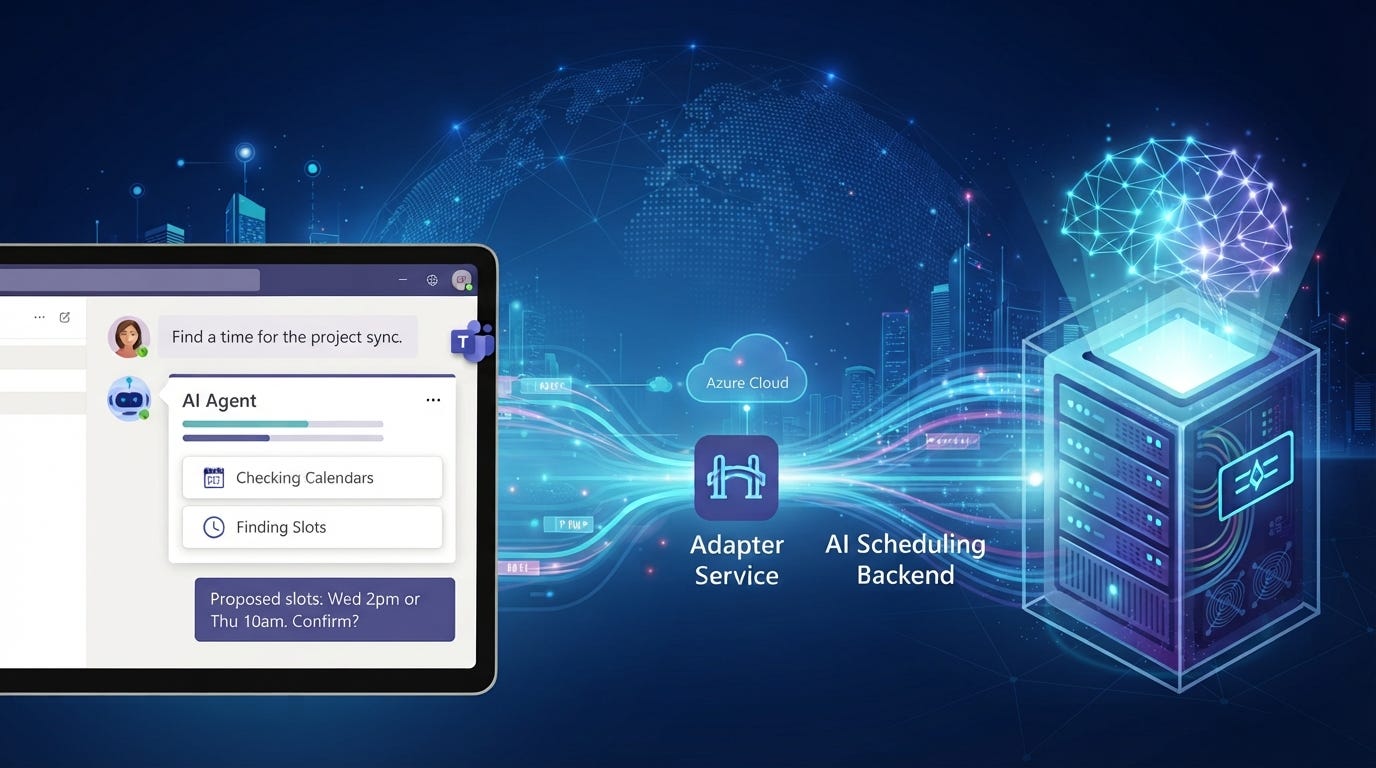
Bring the Agent Into Microsoft Teams
The best agent in the world is worthless if nobody opens the app it lives in. The highest-leverage build this month isn't a smarter model, it's a bridge: wiring an agent into Microsoft Teams so people reach it where they already work. Three parts make it go: an adapter service that translates between Teams and your agent, Adaptive Cards that show progress instead of a spinner, and real conversation-state management so the thread remembers itself.
|
Meet users in their tools. A separate app is a tax most teams won't pay.
|
|
Three parts to the bridge. An adapter service, progress via Adaptive Cards, and conversation-state management.
|
|
The bridge is the product. Wiring systems together can matter as much as the AI itself.
|
"An AI agent is only useful if people can actually interact with it."
Read the build →
|
|
|
The Room · Live Event
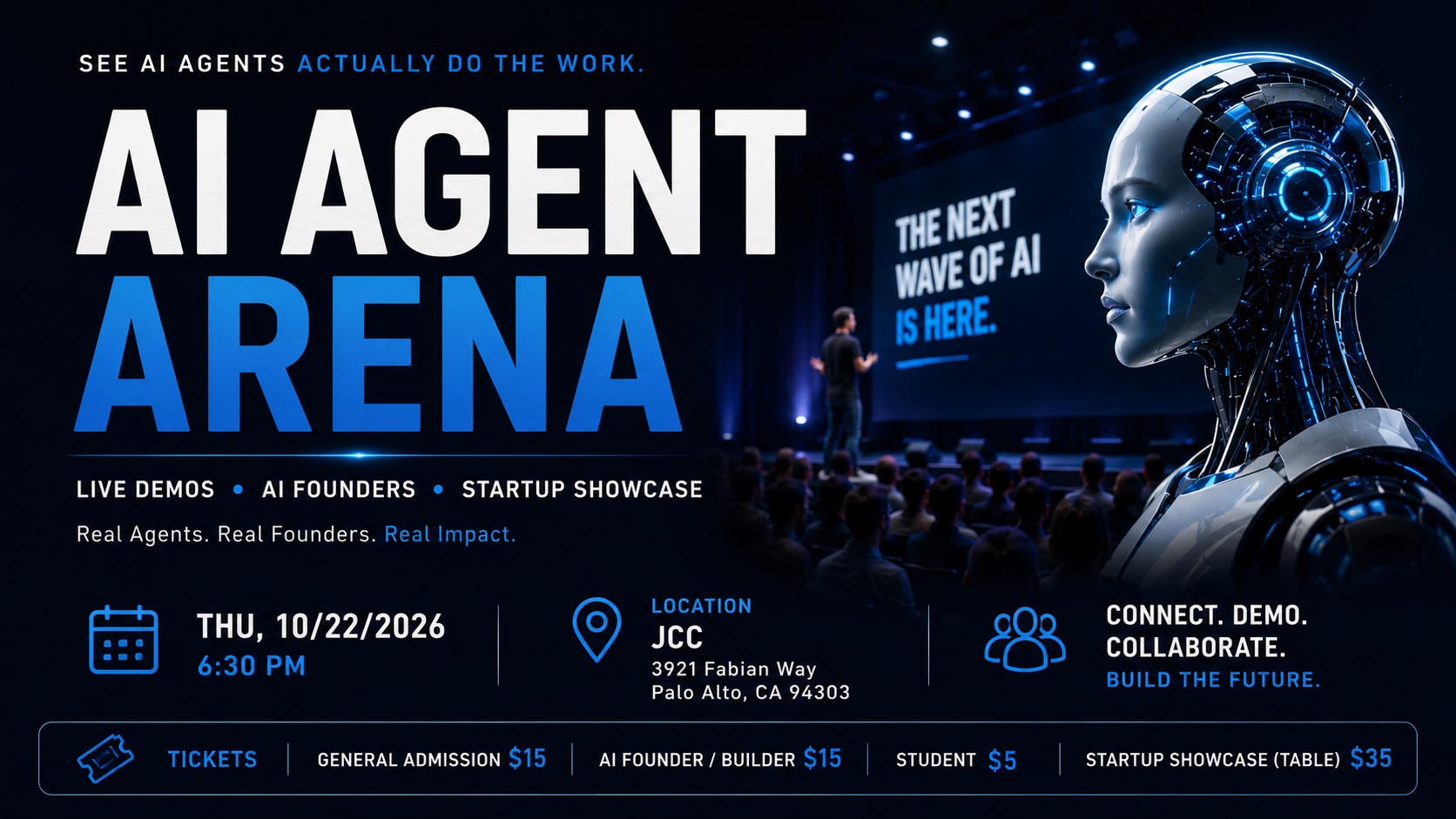
AI Agent Arena: Live Demo Night
Thursday, October 22, 2026 · 6:30–8:30 PM (doors 6:00) · Oshman Family JCC, Einstein Room E-104, Palo Alto
Ten agent teams. Five minutes each. Live, unscripted demos only, no slides, no video, no pre-recorded escape hatch. The audience votes across six award categories, and the night pairs the competition with networking, pizza, and free parking. Tickets $15 general, $5 students, $35 for a startup showcase table. A few weeks out, grab a seat now.
Get tickets →
|
|
|
The Magazine
Read AI Edge for Leaders as a Flipbook

Every issue of AI Edge for Leaders is also a full emagazine you can page through. The August issue, The New AI Advantage, is on why the model is the commodity and the moat is everything you build around it. Read it free, no signup required.
Open the magazine →
|
|
|
The Stack This Month · Read in Any Order
Under the Hood, and the Long View
One for the builders, one for the career.
Under the Hood
The Long View
|
The Making of Luck in Tech →
Most luck isn't random, it's manufactured, through personal agency, 1%-a-day compounding, and staying open enough to spot the door when it opens.
|
|
|
On The Light Side
The whole issue, in three panels: your newest hire has read the governance doc, and fully intends to follow it.
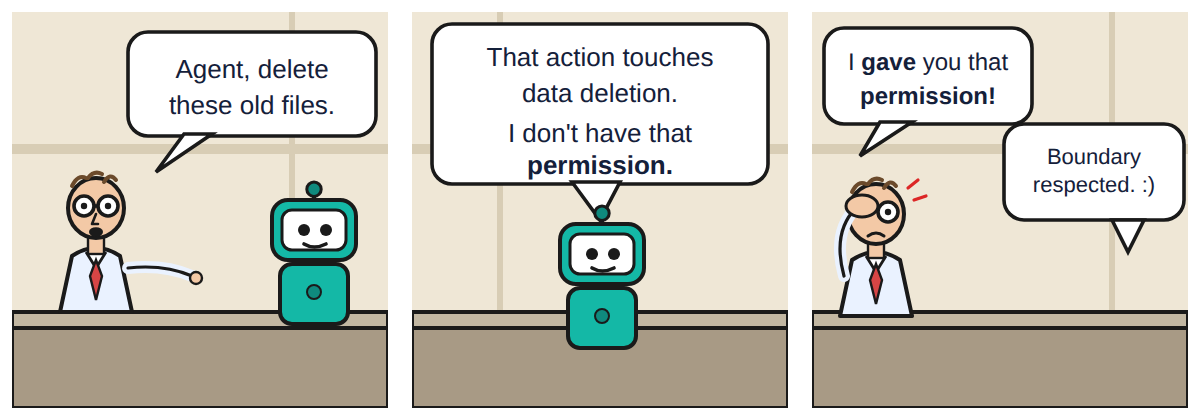
The first agent to read its own governance doc.
My First AI Job Interview
We'll end where the whole issue points: a short story from the blog, set in 2032, in which an AI agent is interviewed for a job, by another AI. The interviewer, "Ava," has run 18,000 interviews with a 96.2% satisfaction score. The candidate has rehearsed 47 versions of itself and been coached to seem a little less optimized, a little more believably uncertain, because humans find uncertainty reassuring. That is the punchline that should worry us all. When both sides are AI, the whole performance of hiring collapses into a hall of mirrors. It's fiction. It also feels about six months early.
|
"Humans find uncertainty reassuring."
|
Read the story →
|
|
Your newest coworkers don't sleep, don't forget, and don't need a desk. They do need managing, a badge, a boundary, and a human over the big red buttons. Hire them like you mean it.
Until next month,
Raj Lal
Founder & CEO, ANCI AI (formerly TEAMCAL AI)
|
|
One ask: reply and tell me the first job you'd actually hand an agent on your team, and the one button you'd never let it push. I read every reply.
|
|
ANCI AI (formerly TEAMCAL AI)
AI Edge for Leaders · Monthly
anci.app
|
You're receiving this as part of the ANCI / Igniter community or AI Edge for Leaders subscribers.
Unsubscribe
·
View in browser
·
Privacy
|
|
ANCI · Operated by Calndr Inc. · Palo Alto, CA, USA
|
|
|